
Template builders have come a long way, but so have the expectations of customers using your website. Here's how to make the right call.
What DIY Does Well
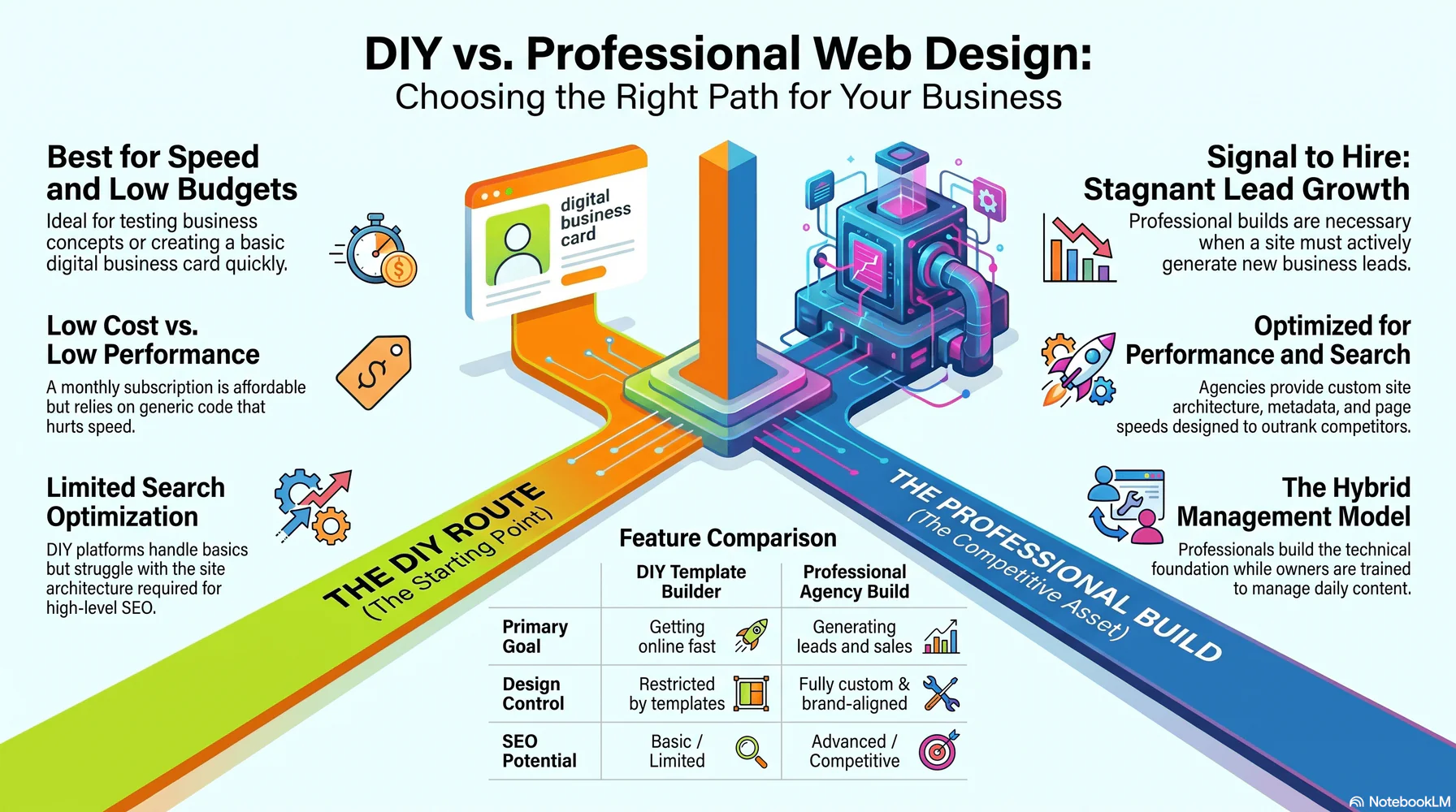
Self-serve website platforms (Squarespace, Wix, and others) have improved dramatically in the past decade. For the right situation, they're a reasonable choice. If you're testing a business concept and need something online within a week, they get you there. If your site serves primarily as a digital business card with no SEO ambitions, a template can work fine.
DIY also makes sense when budget is genuinely the constraint. A $16/month Squarespace subscription beats nothing. The key is being honest about what you're getting: a starting point, not a competitive asset.
Where DIY Falls Short
The limitations of template platforms compound over time. Performance is often poor: template platforms load generic code that hurts speed, which hurts SEO. Customization hits walls quickly: the design looks like a template because it is one.
Search optimization is where DIY struggles most. SEO requires thoughtful site architecture, page speed, structured content, and proper metadata. Template platforms can handle the basics, but they're not optimized for competing on search; they're optimized for getting you online fast.
When to Hire a Professional
The signal to hire a web professional is usually one of three things: your site isn't generating leads, you're competing in a market where online presence matters, or you've outgrown what a template can do. Any of these is sufficient reason.
When hiring, look for a portfolio of work in your industry or business size, a clear process (not just a deliverable list), references you can actually call, and a designer who asks about your business goals before asking about aesthetics.
The Hybrid Approach
Many COLEwebdev clients end up with a professional-built WordPress site they manage themselves. We handle the architecture, SEO structure, performance, and visual design, then hand it off with training so the client can update content day to day.
This hybrid model gives you the best of both: a professional foundation with self-serve flexibility. It's particularly well-suited to businesses that update their content regularly, restaurants changing menus, event organizations posting schedules, retailers managing product listings.
DIY is a valid starting point, not a permanent strategy. When your website starts affecting your ability to compete for customers, it's time to invest in a professional build.